The first few days after a baby’s birth are filled with checkups, vaccinations, feeding schedules, and endless moments of wonder. Amid all of this, parents are often introduced to a simple test called newborn hearing screening.
Many families wonder whether it is necessary, especially when their baby appears healthy and responds to touch, light, or familiar voices. The short answer is yes.
Hearing plays a vital role in how babies learn to communicate, understand language, and connect with the world around them. Because hearing loss is not always visible, newborn hearing screening helps identify potential concerns before they begin affecting a child’s development.
Hearing Loss in Babies: More Common Than People Think
Most parents assume they would immediately notice if their baby had difficulty hearing. The truth is hearing loss in newborns can be surprisingly difficult to detect without proper testing. Some babies with hearing loss may still react to vibrations, movements, or very loud sounds. As a result, parents may not realize there is an issue during the early months.
According to hearing health experts, hearing loss is one of the most common conditions present at birth. Some babies are born with hearing difficulties even when there is no family history, no pregnancy complications, and no obvious risk factors. This is exactly why universal newborn hearing screening has become a standard recommendation in many hospitals worldwide.
Is Newborn Hearing Screening Necessary?
For many parents, the question is understandable. If a baby looks healthy and seems content, why conduct another test? The answer lies in early detection. Hearing is closely connected to speech, language, social interaction, and cognitive development. The earlier hearing concerns are identified, the earlier families can access support and treatment if needed.
Without screening, hearing loss may remain unnoticed for months or even years. During that time, a child could miss important opportunities to develop communication skills at the same pace as their peers. Newborn hearing screening is designed to identify these concerns before symptoms become obvious. It is quick, safe, and provides valuable information during a critical stage of development.
Why Is Newborn Hearing Screening Important?
It Catches Hidden Hearing Issues Early
One of the biggest benefits of newborn hearing screening is that it helps uncover hearing problems that might otherwise go unnoticed. Many forms of hearing loss cannot be detected simply by looking at a baby. Even attentive parents may not see any warning signs in the first few months.
The screening test can identify potential hearing difficulties before developmental delays begin to appear. This allows healthcare professionals to perform further evaluations and determine whether treatment or ongoing monitoring is needed. Early awareness gives families more options and better outcomes.
It Protects Your Baby’s Speech and Language Growth
Babies begin learning language long before they say their first word. From birth, they listen to voices, recognize patterns in speech, and absorb sounds from their environment. These experiences help build the foundation for communication.
When hearing loss goes undetected, a baby may miss some of these important sound experiences. Over time, this can affect speech development, vocabulary growth, and language comprehension.
Children who receive early intervention for hearing loss often develop significantly stronger communication skills than those whose hearing challenges are discovered later. The goal is not simply to detect hearing loss. It is to ensure babies have the support they need to develop language skills from the very beginning.
It Helps Prevent Learning Difficulties Later
Language development and learning are closely linked. Children use language to understand instructions, ask questions, express ideas, and participate in classroom activities. When hearing loss is identified late, it can create challenges that affect educational progress.
Some children with undiagnosed hearing difficulties may struggle with reading, communication, attention, or academic performance. By identifying hearing concerns early, families and healthcare providers can take proactive steps to support a child’s learning journey before problems arise. In many cases, early intervention helps children enter school with stronger communication and learning skills.
It Protects the Critical First Six Months of Brain Development
The first five to six years of life are incredibly important for brain development.
During this period, a baby’s brain is rapidly building connections related to language, listening, and communication. These early experiences shape how children understand and use language throughout their lives. Experts often refer to this as a critical developmental window.
If hearing loss is present and remains untreated during this stage, valuable opportunities for auditory and language development may be missed.
When hearing concerns are identified early, interventions such as hearing aids, therapy, or other support services can begin during this crucial period. That early action can make a meaningful difference in long-term outcomes.
It Allows Treatment to Begin Before Delays Occur
The sooner a hearing issue is identified, the sooner support can begin. Every child is different, and treatment plans vary depending on the type and severity of hearing loss. Depending on the type and severity of hearing loss, children may need hearing devices or other appropriate hearing interventions, alongside speech and language support when needed.
The important point is that families gain time. Instead of waiting until developmental delays become noticeable, they can begin working with specialists early and create a plan tailored to their child’s needs. Parents can also watch for the signs of hearing loss in children as their baby grows.
Today, advancements in hearing technology and early intervention programs provide children with more opportunities than ever before to thrive.
A Small Test That Can Make a Big Difference
Newborn hearing screening may seem like a routine hospital procedure, but its impact can be lifelong. It helps identify hidden hearing concerns, supports healthy speech and language development, and protects a crucial period of brain growth. Most importantly, it gives families the opportunity to act early when support is needed.
For parents, peace of mind is valuable. Knowing that a baby’s hearing has been properly checked is one small step that can make a meaningful difference in their future development.
If you have questions about your baby’s hearing or developmental milestones, the team at RISE Hearing Aid Centre is here to guide you with expert support and personalized care. Book a consultation to speak with our audiologists.
Frequently Asked Questions (FAQs)
Why can’t I just wait to see if my baby responds to sounds at home?
Babies with hearing loss may still react to certain sounds, vibrations, or movements. These responses can make it difficult to determine whether hearing is developing normally. A professional screening test provides much more accurate information than observation alone.
What happens if you don’t do newborn screening?
Without screening, hearing loss may go undetected until speech or developmental delays become noticeable. By that stage, valuable time for early intervention may have already been lost.
Why do healthy babies with no risk factors need to be tested?
Many babies diagnosed with hearing loss have no known risk factors. They may be born after healthy pregnancies and have no family history of hearing problems. Universal screening helps identify these unexpected cases.
Is the hearing screening test painful or safe for a newborn?
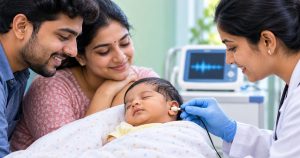
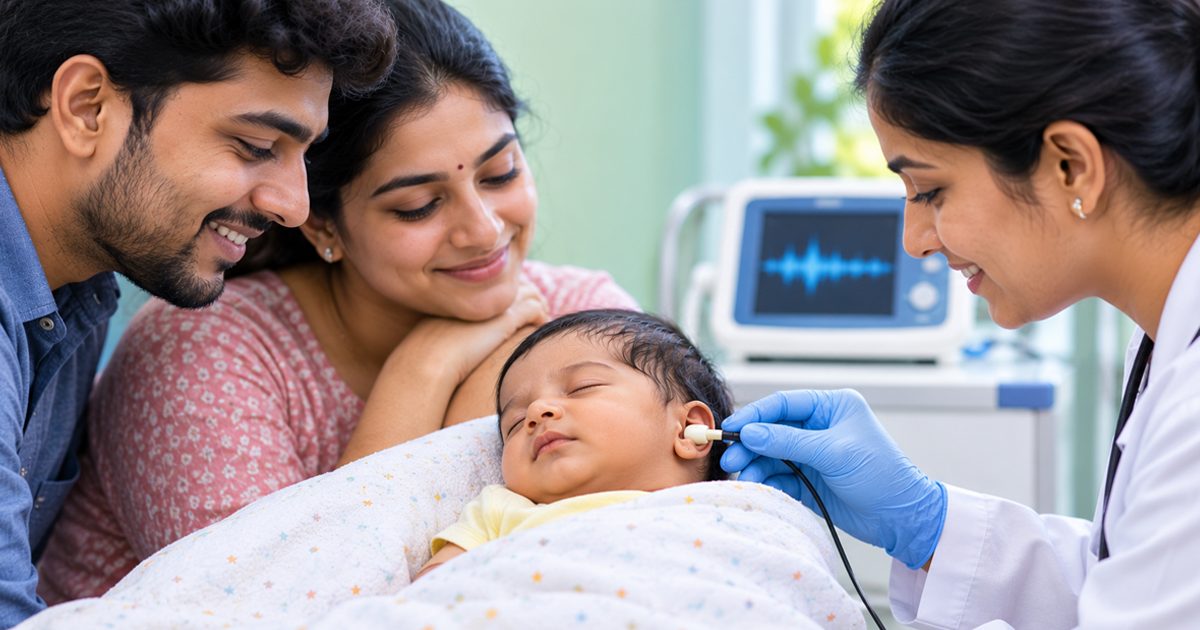
It is safe. The test is non-invasive and painless. Most babies sleep through the procedure without any discomfort.
How long does the newborn hearing test take to complete?
The screening is usually completed within a few minutes. The exact time may vary, but most newborn hearing tests are quick and can often be performed while the baby is resting.