Advanced Electrophysiological Hearing Tests
Objective hearing tests that assess auditory function when conventional hearing tests are not sufficient or possible
What is an Electrophysiologic Auditory Test?
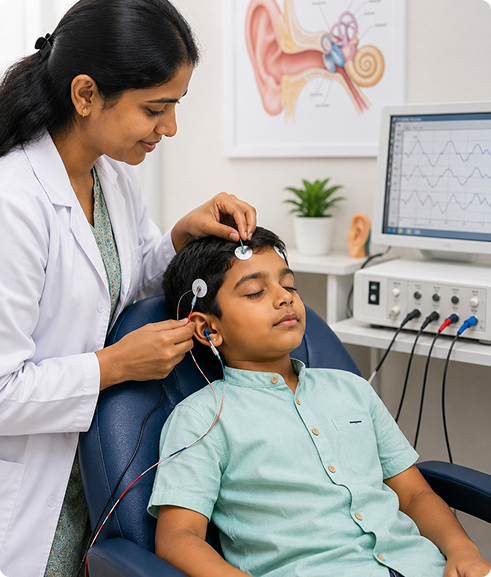
Electrophysiological hearing tests are advanced diagnostic assessments that measure how the auditory system responds to sound. These tests record electrical activity from the inner ear, hearing nerve, and auditory pathways in the brain, providing objective information about hearing function.
Unlike conventional hearing tests that rely on patient responses, electrophysiological tests evaluate auditory activity directly. This makes them particularly useful for newborns, infants, young children, individuals with developmental or neurological conditions, and patients who are unable to participate reliably in standard hearing assessments.
These tests are also recommended when hearing test results are unclear, inconsistent, or when a detailed evaluation of auditory function is required. By identifying how sound signals travel through the hearing system, electrophysiological testing helps support accurate diagnosis and treatment planning.
At RISE, electrophysiological hearing tests are performed as part of a comprehensive hearing evaluation to help diagnose hearing disorders and guide appropriate care.
When is an Electrophysiologic Assessment of Hearing Needed?
An electrophysiological hearing test may be recommended when conventional hearing assessments cannot provide complete, reliable, or objective information about hearing function. These tests help audiologists evaluate auditory responses without requiring active participation from the patient.
Common situations where electrophysiologic auditory tests may be recommended include:
- Newborns and infants who require objective hearing assessment following hearing screening
- Children with delayed speech and language development
- Patients who do not pass newborn hearing screening programmes
- Individuals with suspected hearing loss but inconsistent behavioural test responses
- Adults experiencing unexplained hearing difficulties despite normal routine hearing tests
- Patients reporting tinnitus, dizziness, or balance-related symptoms
- Individuals suspected of auditory nerve dysfunction or auditory processing disorders
- Patients being evaluated for hearing aids or cochlear implants
- Elderly patients who may have difficulty participating in conventional testing
- Individuals with neurological conditions that may affect auditory function
Electrophysiological testing is particularly valuable when objective hearing information is required. The results help audiologists determine the presence, degree, and possible location of hearing disorders, supporting accurate diagnosis and personalized treatment planning.
Our Advanced Electrophysiological Diagnostic Services
Brainstem Evoked Response Audiometry (BERA / ABR Test)
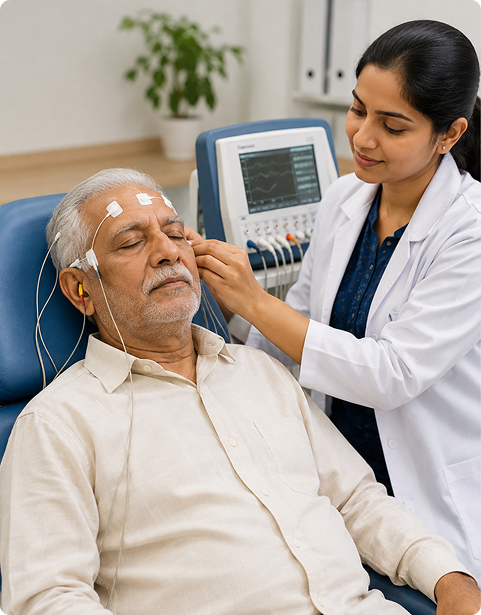
BERA, also known as Auditory Brainstem Response (ABR), is an objective hearing assessment that measures how sound signals travel from the inner ear to the auditory nerve and brainstem. During the test, small recording electrodes are placed on the scalp and around the ears to capture electrical responses generated by the auditory system. Because the test does not rely on active patient participation, it can be performed on individuals who are unable to provide reliable behavioural responses. BERA is commonly recommended for newborns, infants, young children, and individuals with developmental or neurological conditions. It also helps assess hearing thresholds, investigate auditory nerve-related disorders, and support hearing aid or cochlear implant evaluations. The results provide valuable information for accurate diagnosis and treatment planning.
Auditory Steady-State Response (ASSR)
ASSR is an advanced electrophysiological hearing test used to estimate hearing thresholds across multiple frequencies. The assessment measures how the auditory system responds to continuous sound stimuli and provides detailed frequency-specific information about hearing ability. This allows audiologists to obtain objective hearing data even when conventional testing is not possible. The test is particularly useful for infants, young children, and patients with severe or profound hearing loss. ASSR results help determine the degree and configuration of hearing loss, supporting hearing aid fitting, cochlear implant assessment, and individualized hearing management strategies. It is often used alongside other electrophysiological tests to provide a comprehensive understanding of auditory function.
Otoacoustic Emissions (OAE)
Otoacoustic Emissions (OAE) testing evaluates the function of the cochlea, specifically the outer hair cells that play a vital role in hearing. A small probe placed in the ear canal delivers sounds and records the cochlear response. The procedure is quick, non-invasive, and does not require any active response from the patient. OAE testing is widely used in newborn hearing screening programmes and early hearing loss detection. It also helps monitor cochlear health and identify potential hearing concerns before they become more noticeable. The results provide important diagnostic information and are often used in combination with other hearing assessments.
Electrocochleography (ECochG)
Electrocochleography (ECochG) is a specialized electrophysiological test that measures electrical activity generated within the cochlea and auditory nerve. The assessment provides detailed information about inner ear function and helps evaluate how sound signals are transmitted through the auditory system. Specialized recording techniques are used to obtain objective diagnostic data. ECochG is often recommended for patients experiencing tinnitus, dizziness, fluctuating hearing loss, ear fullness, or symptoms associated with Ménière's disease. The test helps audiologists and ENT specialists assess inner ear disorders that may not be fully identified through conventional hearing evaluations. The results support accurate diagnosis and guide appropriate treatment recommendations.
What to Expect During the Procedure
Preparing for Your Appointment
The audiologist reviews the patient’s hearing concerns, medical history, and previous hearing test reports before determining the most appropriate electrophysiological assessments. For infants, appointments may be scheduled during natural sleep periods when required.
Electrode and Sensor Placement
Small recording electrodes are placed on the scalp and around the ears. These sensors record naturally occurring electrical responses generated by the auditory system and do not introduce any electrical current into the body.
Sound Stimulation and Signal Recording
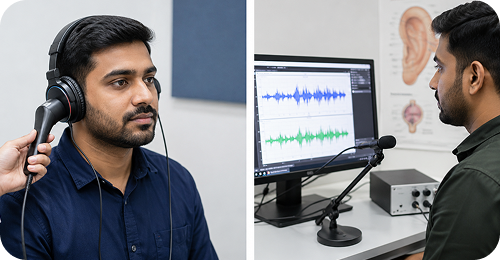
Sounds are delivered through earphones or soft ear inserts while specialized diagnostic equipment records responses from the inner ear, auditory nerve, and brainstem. The patient is not required to actively respond during testing.
Post-Procedure and Next Steps
After the assessment, the audiologist reviews the recorded data and explains the findings. Depending on the results, recommendations may include additional testing, hearing aid evaluation, medical referral, or ongoing hearing management.
Why Choose RISE ?
Expert Audiologists and Specialists
RISE provides advanced hearing assessments performed by experienced audiologists who work with patients across all age groups, from newborns to elderly individuals. Each evaluation is tailored to the patient's specific hearing concerns, clinical history, and diagnostic requirements. The audiology team brings focused expertise in electrophysiological testing, ensuring that results are interpreted accurately and communicated clearly to patients and referring clinicians.
Advanced Diagnostic Infrastructure in Chennai
The centre utilizes specialized electrophysiological testing equipment designed to measure auditory responses accurately and reliably. From calibrated stimulus delivery systems to high-sensitivity recording hardware, the diagnostic infrastructure supports precise assessment across a wide range of hearing conditions and patient profiles.
Precise Diagnostic Insights for Custom Hearing Solutions
The results obtained from electrophysiologic auditory tests form the foundation for clinical decision-making at RISE. Findings help guide hearing aid recommendations, cochlear implant evaluations, medical referrals, and long-term hearing management strategies. The focus is on providing objective, actionable information that supports informed clinical decisions and personalized hearing care for every patient.
Frequently Asked Questions
What is the difference between a standard hearing test and an electrophysiological hearing test?
A standard hearing test requires the patient to respond when sounds are heard. An electrophysiological hearing test measures electrical responses generated by the auditory system and does not depend on active participation. This makes it useful for infants and patients who cannot provide reliable responses.
Are electrophysiological hearing tests painful or safe for infants?
These tests are non-invasive and generally painless. The electrodes only record electrical activity and do not deliver any electrical current into the body. They are routinely used for newborns and infants worldwide.
How long does an electrophysiologic assessment of hearing take?
The duration depends on the specific tests being performed. OAE testing may take only a few minutes, while ABR or ASSR assessments can take between 30 minutes and two hours depending on the patient’s age and cooperation.
Does the patient need to be asleep during an ABR or BERA test?
Infants typically achieve the best results when sleeping naturally during the test. Older children and adults may not need to sleep, although remaining relaxed and still improves recording quality.
What is the cost of electrophysiological hearing tests at RISE in Chennai?
The cost varies depending on the specific assessments required. Tests such as BERA, ASSR, OAE, and ECochG are priced individually, and the total depends on the combination recommended by the audiologist based on the patient’s hearing concerns and clinical requirements. Contact RISE Hearing Aid Centre directly or book a consultation for accurate pricing information.


Take the First Step — Book Your Consultation
Book an assessment with RISE certified specialists and get a clear, personalised plan for your or your child’s hearing, communication, or developmental needs.