Many parents are told to “wait and see” when their child is slow to talk. Some children do catch up on their own, but many do not, and the months spent waiting can be valuable time lost.
Early intervention speech therapy means finding and supporting communication difficulties as early as possible, ideally before age 3. This guide explains why the early years matter so much, what an early intervention programme involves, and how you can help your child at home.
What Is Early Intervention Speech Therapy?
Early intervention speech therapy is support for babies, toddlers and young children who show signs of delayed communication. It focuses on the skills that come before and alongside talking: paying attention to people, understanding words, using gestures, babbling, playing and taking turns.
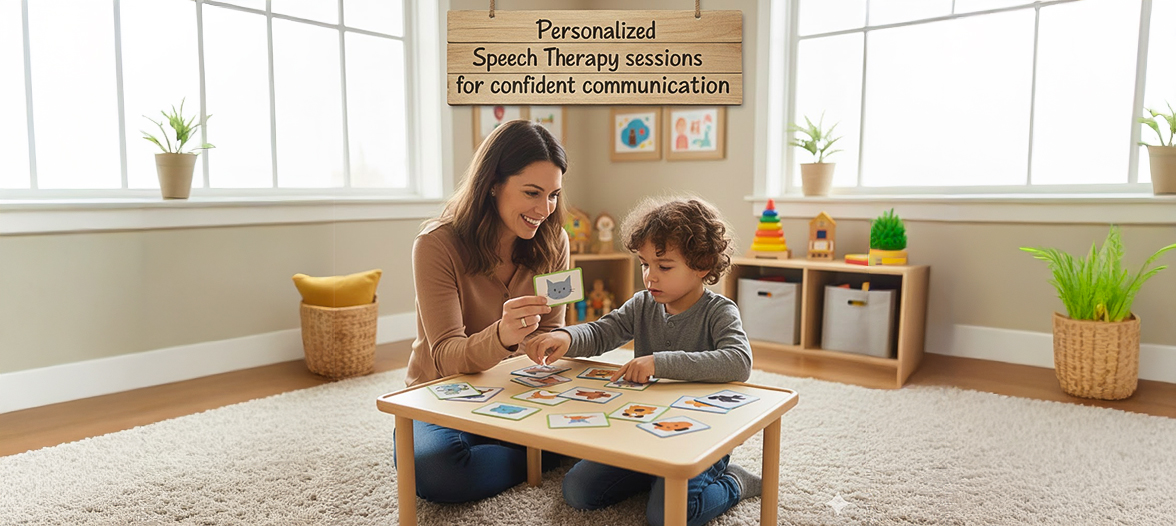
Sessions are play-based and closely involve parents, because young children learn language through everyday interactions with the people they spend the most time with.
Why the First Five Years Matter
The Brain Is Most Adaptable When Young
A child’s brain develops faster in the first few years of life than at any other time. During this period it responds especially well to new experiences, so speech and language skills learned early are easier to build and tend to last.
Language Is the Foundation for Learning
Understanding and using language supports reading, writing, following classroom instructions and making friends. Children who start school with stronger communication skills find it easier to keep up, both academically and socially.
Early Help Reduces Frustration
When children cannot express what they want, they often become frustrated, which can lead to tantrums or withdrawal. Helping them communicate early usually improves behaviour and confidence as well.
Wait and See, or Get Help Early?
Some late talkers do catch up without therapy. The difficulty is that no one can reliably predict which children will catch up and which will not. Children who understand few words, use few gestures, have frequent ear infections or hearing loss, or have a family history of speech difficulties are less likely to catch up on their own.
An assessment does not commit your child to long-term therapy. It gives you clear information. If your child is on track, you can relax. If not, you can start support at the age when it works best.
Signs Your Toddler May Need Early Intervention
- No babbling by 12 months
- Not pointing, waving or using other gestures by 12 months
- No single words by 16 to 18 months
- Not combining two words by 24 months
- Does not respond to their name, or does not seem to understand simple words
- Loses words or skills they used to have
- Speech is very hard for family members to understand by age 3
Hearing should always be checked first, as even mild hearing loss can delay speech. Read more in our guide to the signs your child may need speech therapy.
What an Early Intervention Programme Includes
Detailed Assessment
The programme begins with a speech and language assessment covering understanding, expression, play, attention, oral-motor skills and social interaction, along with a detailed history from parents.
A Personalised Therapy Plan
The therapist sets small, achievable goals, such as responding to their name, using gestures, copying sounds or saying first words, and reviews them regularly.
Play-Based Sessions
Therapy uses toys, songs, books and everyday routines. Children learn best when they are having fun, so sessions are designed to feel like play rather than lessons.
Parent Coaching
Parents learn simple strategies, such as following the child’s lead, waiting for a response and adding one word to what the child says. This turns every part of the day into a chance to practise.
Support From Other Specialists
Where needed, speech therapists work with audiologists, occupational therapists and developmental specialists, so that hearing, sensory and developmental needs are addressed together.
Simple Activities to Try at Home
- Talk through your day: Describe what you are doing while cooking, dressing or bathing your child.
- Read together every day: Point to pictures, name them and pause to let your child respond.
- Sing songs with actions: Rhymes with gestures help children connect words with meaning.
- Offer choices: Hold up two items and ask, “Do you want the ball or the car?”
- Wait before helping: Give your child a few seconds to point, make a sound or try a word.
- Limit screen time: Face-to-face interaction builds language far better than videos.
- Use your home language: Children can learn Tamil, English or both. Speaking the language you are most comfortable in gives your child the richest language input.
Conclusion
Early intervention gives children the best chance to build strong communication skills while their brains are most ready to learn. If anything about your child’s speech or understanding worries you, an early assessment brings clarity and, if needed, timely support.
Our child speech therapists in Chennai run early intervention programmes for babies, toddlers and young children, with parents involved at every step. To understand how therapy helps over time, read about the benefits of speech therapy for children and how long speech therapy takes to work.
Frequently Asked Questions (FAQs)
What is the best age for early intervention speech therapy?
The earlier, the better. Early intervention works best before age 3, but children of any age benefit from support. If you have concerns, do not wait for a particular age to get an assessment.
Is my child too young for speech therapy?
No child is too young for an assessment. Therapists work with babies and toddlers through play and parent coaching, focusing on early skills like attention, gestures and babbling.
Will my child grow out of a speech delay?
Some late talkers catch up without therapy, but many do not, and it is hard to predict which group a child belongs to. An assessment helps you decide whether to wait or start support.
What happens in an early intervention session?
Sessions are play-based. The therapist uses toys, songs and routines to build communication skills, and shows parents how to continue the same activities at home.
Does speaking two languages at home cause speech delay?
No. Learning two languages does not cause speech delay. Bilingual children may mix languages at first, which is normal. If a child is behind in both languages, an assessment is recommended.
How often are early intervention sessions?
Most toddlers attend one to three sessions a week, with daily practice at home. The therapist recommends a schedule after the assessment and adjusts it as your child progresses.