
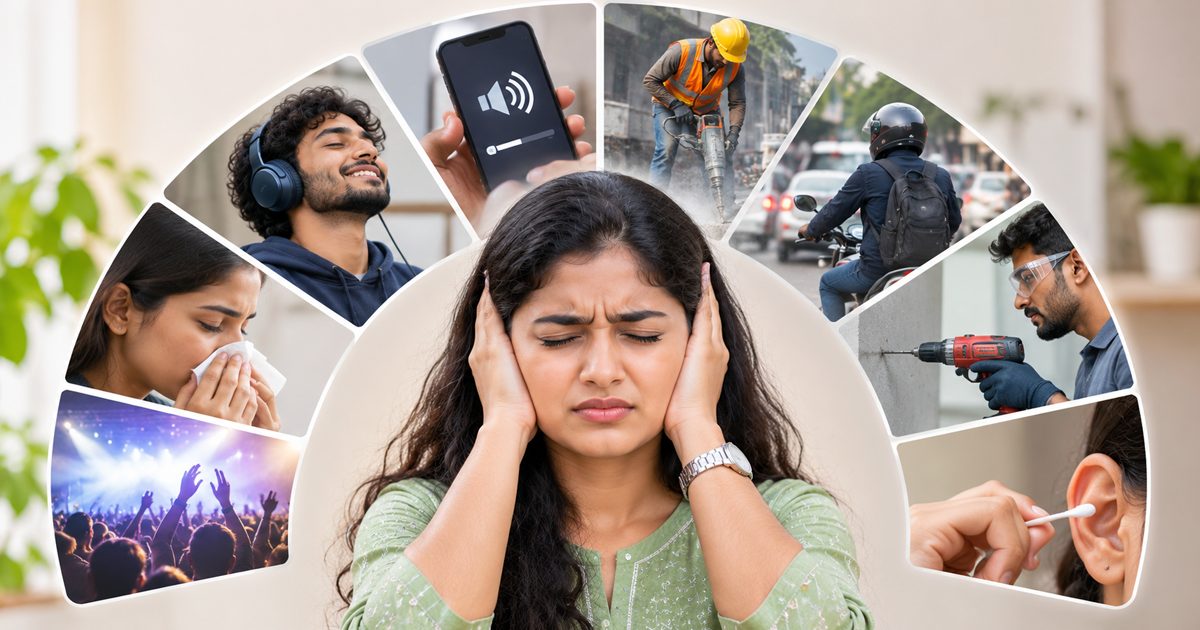
Although hearing loss becomes more common with age, it can affect people at any stage of life. Prolonged noise exposure, ear diseases, and other underlying conditions can contribute to hearing problems long before age-related changes begin. Everyday routines that seem harmless can also gradually affect hearing, often without noticeable symptoms at first.
Hearing damage rarely announces itself dramatically. It builds in the background, through repeated exposure to noise, careless ear care habits, and symptoms that get brushed off as nothing serious. Because the decline is gradual, many people only seek help once conversations have already become a struggle.
The good news is that many hearing-related risks can be reduced through preventive measures and safer daily habits. Recognising the daily activities that harm your hearing is the first real step toward protecting what you have.
8 Daily Activities That Harm Your Hearing
1. Using Headphones for Hours
Headphones are now an extension of daily life. People wear them on commutes, during workouts, through long workdays, and into the late hours of the evening. The convenience is undeniable. But so is the risk.
The real problem is not just volume. It is duration combined with volume. Listening at moderate to high levels for several hours every day gradually damages the tiny hair cells deep inside the inner ear, the structures responsible for converting sound into signals the brain can understand. Here is the part that matters most: once those cells are gone, they do not grow back.
In noisy environments, the natural response is to turn the volume up further. Over time, this becomes a cycle that quietly accelerates noise-induced hearing loss.
Warning signs worth taking seriously:
- A ringing or buzzing sensation after removing headphones
- Sounds that feel temporarily muffled
- Needing to increase volume levels frequently
- Struggling to follow speech in crowded spaces
A simple habit worth adopting is the 60/60 rule: keep volume at no more than 60% of maximum and limit continuous listening to 60 minutes before giving your ears a rest.
2. Cleaning Your Ears with Cotton Buds
This one surprises people. Cotton buds may seem like an effective way to clean the ears, but hearing specialists routinely advise against using them inside the ear canal.
The reality is, earwax is not the enemy. It acts as a natural barrier, trapping dust, bacteria, and debris while keeping the ear canal from drying out. The ear is genuinely self-cleaning. Wax naturally migrates outward on its own, without any help.
When cotton buds are pushed into the canal, they typically push wax deeper rather than removing it. This can create blockages, cause discomfort, reduce hearing clarity, and in some cases, reach and injure the eardrum. Small injuries to the canal also raise the risk of infection, often without any obvious immediate pain. If wax buildup is becoming a real issue, a professional ear cleaning is both safer and more effective than anything available over a bathroom counter.
3. Ignoring Recurring Ear Infections
Many adults dismiss ear infections as a temporary inconvenience. However, recurring infections should never be ignored.
Repeated infections can cause inflammation and fluid buildup that affects how sound travels through the ear. Over time, chronic infections may lead to damage in the middle or inner ear, increasing the likelihood of long-term hearing difficulties.
Symptoms that deserve attention include:
- Pain or pressure inside the ear
- Any fluid draining from the ear canal
- A persistent feeling of fullness or blockage
- Itching that keeps returning
- Episodes of reduced hearing
Early treatment often prevents complications. Delaying medical care can allow underlying issues to worsen and potentially affect hearing permanently.
4. Attending Loud Fitness Classes
Indoor cycling studios, high-intensity group classes, and dance-based fitness sessions are genuinely good for the body. The noise levels inside them, though, are often far less kind to the ears.
Music in these settings regularly exceeds safe sound exposure limits. Instructors use amplification to drive energy in the room, and participants are frequently exposed to this for 45 to 60 minutes per session, sometimes multiple times a week. That cumulative exposure adds up quickly.
Leaving a class with ringing ears or a sense of muffled hearing is not a sign that the session was intense. It is a warning sign that the auditory system has been pushed beyond its comfort zone.
Musician-grade earplugs are a practical solution. They reduce harmful volume without blocking out the instructor’s voice or the music itself.
5. Smoking
Smoking’s relationship with lung disease, heart disease, and cancer is well documented. The link between smoking and hearing health is far less talked about, but no less real.
Cigarette smoke reduces blood circulation throughout the body, including the delicate sensory structures of the inner ear. Those structures depend on a consistent supply of oxygen-rich blood to function properly. Restrict that supply over years, and the hearing system suffers for it.
Smoking is also associated with oxidative stress and inflammation, which may contribute to damage in the auditory system. Second-hand smoke exposure has been associated with an increased risk of hearing loss in both adolescents and adults, although findings vary across populations and hearing frequencies.
Quitting benefits nearly every system in the body. The ears are among them.
6. Using Hand Dryers Frequently
Hand dryers are found in offices, malls, restaurants, airports, and schools. Because they are so common, people rarely think of them as a hearing risk.
However, some high-speed hand dryers can produce noise levels that are surprisingly loud, especially when standing close to the unit. For adults, occasional exposure is unlikely to cause significant harm. The concern becomes greater with repeated exposure and for young children, whose ears are more sensitive.
Certain commercial hand dryers can generate sound levels comparable to busy traffic or even some power tools. While this may seem like a small issue, it highlights an important fact: potentially harmful noise can come from unexpected everyday sources.
7. Attending Loud Sporting Events
There is something electric about a live sporting event. The crowd, the noise, the atmosphere. It is one of the great communal experiences. But from a hearing health perspective, it is also one of the riskier ones.
Large stadiums and indoor arenas can generate noise levels well above what hearing specialists consider safe for extended exposure. Fans seated near speaker banks or in particularly vocal supporter sections face even greater intensity. For regular attendees, that exposure accumulates across an entire season.
Children are especially vulnerable. Their auditory systems are still maturing, making them more susceptible to noise-related harm. Parents can learn the signs of hearing loss in children to catch problems early.
A simple pair of earplugs or noise-reducing earmuffs can take the edge off the harmful frequencies without diminishing the experience.
8. Delaying Your Hearing Test
One of the most overlooked habits that are hurting your hearing is postponing a professional hearing evaluation.
Hearing loss develops gradually in most cases. People adapt without realising it, and by the time the difficulty becomes obvious, meaningful change has often already occurred. Quite often, it is family members who notice first.
Signs others may observe before you do:
- Frequently asking people to repeat themselves
- Television volume creeping higher over time
- Missing parts of conversations in noisy environments
- Misunderstanding words even in quiet settings
A routine hearing assessment takes the guesswork out of it. It provides a clear, objective picture of where your hearing stands and whether anything warrants attention. Early detection consistently leads to better outcomes than waiting for the problem to become impossible to ignore, and it helps you avoid the hidden costs of untreated hearing loss.
How to Protect Your Hearing Every Day
Knowing which activities can affect hearing is only part of the solution. Small daily habits can make a meaningful difference in preserving hearing health.
Give Your Ears a Break from Headphones
Continuous listening can fatigue the auditory system. Regular listening breaks throughout the day reduce cumulative strain. Noise-cancelling headphones can also help by removing the need to compete with background noise through volume.
Avoid Exposure to High Volumes
Whether it is music, machinery, or entertainment venues, limiting exposure to loud sounds remains one of the most effective ways to protect hearing. If someone standing nearby can clearly hear what is coming through your headphones, the volume is already too high.
Wear Earplugs Around Loud Noises
Earplugs are inexpensive, portable, and consistently effective. They are worth having on hand for concerts, sporting events, fitness classes, and any home improvement work. Modern hearing protection is designed to reduce harmful levels while keeping speech and music audible.
Keep Your Ears Dry
Moisture inside the ear canal creates conditions where bacterial and fungal infections can develop. After swimming or showering, gently dry the outer ear with a clean towel and tilt your head to help any trapped water drain naturally.
Avoid inserting cotton buds or other objects into the ear canal, as these can irritate the skin and increase the risk of injury.
Manage and Reduce Your Stress Levels
Stress affects far more than mental wellbeing. High stress levels have been linked to tinnitus, the perception of ringing or buzzing sounds in the ears. Activities such as regular exercise, adequate sleep, meditation, and relaxation techniques can support both overall health and hearing wellness.
Schedule Regular Hearing Checkups
A hearing assessment should sit comfortably alongside dental checkups and eye examinations as part of routine preventive care. It is not something to consider only when something feels wrong. Regular evaluations create a baseline and allow early intervention when trends begin to emerge.
Your Hearing Deserves Daily Attention
The activities that harm your hearing are rarely dramatic. They are woven into ordinary days: the commute playlist, the fitness class, the sporting event, the habit of reaching for a cotton bud. The risk accumulates precisely because none of it feels significant in the moment.
Protecting your hearing does not mean opting out of the things you enjoy. It means being thoughtful about how you engage with them and giving your ears the same consistent care you would offer any other part of your health.
If there is ringing after a loud evening, difficulty catching what people are saying, or a quiet sense that something has shifted, a professional hearing evaluation is the clearest next step. The earlier those conversations happen, the more options remain available. Book a hearing consultation at RISE Care to get a clear picture of your hearing health.
Frequently Asked Questions (FAQs)
Can everyday activities really cause permanent hearing loss?
Yes. Repeated exposure to loud sound, such as long hours on headphones, loud fitness classes or sporting events, can gradually damage the hair cells in the inner ear. These cells do not grow back, so noise-induced hearing loss is usually permanent. The good news is that it is also largely preventable with safer listening habits and hearing protection.
What is the 60/60 rule for headphones?
The 60/60 rule means listening at no more than 60% of your device’s maximum volume for no longer than 60 minutes at a time. After an hour, give your ears a break before listening again. Noise-cancelling headphones make it easier to stay within this limit in noisy places.
Is it safe to clean my ears with cotton buds?
It is best to avoid putting cotton buds inside the ear canal. They tend to push wax deeper, which can cause blockages, discomfort and even injury to the eardrum. The ear cleans itself naturally. If wax buildup is affecting your hearing, a hearing care professional can remove it safely.
How loud is too loud for my ears?
Sounds at or above about 85 decibels can damage hearing with prolonged exposure, and the louder the sound, the shorter the safe listening time. A practical test: if you have to raise your voice to talk to someone an arm’s length away, or your ears ring afterwards, the environment is too loud and hearing protection is a good idea.
How often should I get a hearing test?
Adults with no symptoms benefit from a baseline hearing test and periodic checks after that, with more frequent testing for people over 50 or those regularly exposed to loud noise. If you notice ringing, muffled hearing or trouble following conversations, book a test sooner. A standard test is quick, as explained in how long a hearing test takes.
Can hearing loss caused by noise be reversed?
Permanent noise-induced hearing loss cannot be reversed, because damaged inner ear hair cells do not regenerate. However, early detection helps prevent further damage, and modern hearing aids can greatly improve how clearly you hear and communicate. An audiologist can recommend the right option for your hearing profile.