Case Overview
Enhancing Environmental Awareness and Functional Communication in an Individual with Autism Spectrum Disorder
Background and Presenting Concerns
The individual demonstrated strong factual knowledge but struggled to apply that knowledge in real-world situations. Family members reported difficulty discussing daily experiences, navigating familiar routes, and independently interpreting environmental information.
Clinical Assessment and Key Observations
Assessment through parent interviews, direct observation, functional communication analysis, and natural environment observations revealed difficulties in observation skills, environmental scanning, contextual communication, and social referencing. The challenges were not related to vocabulary deficits but rather the ability to connect experiences with language.
Therapeutic Hypothesis
Improving environmental awareness, observation skills, and contextual communication would enhance their ability to communicate experiences, navigate familiar environments, and participate more effectively in social interactions.
Intervention Strategy
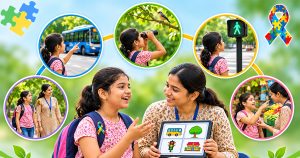
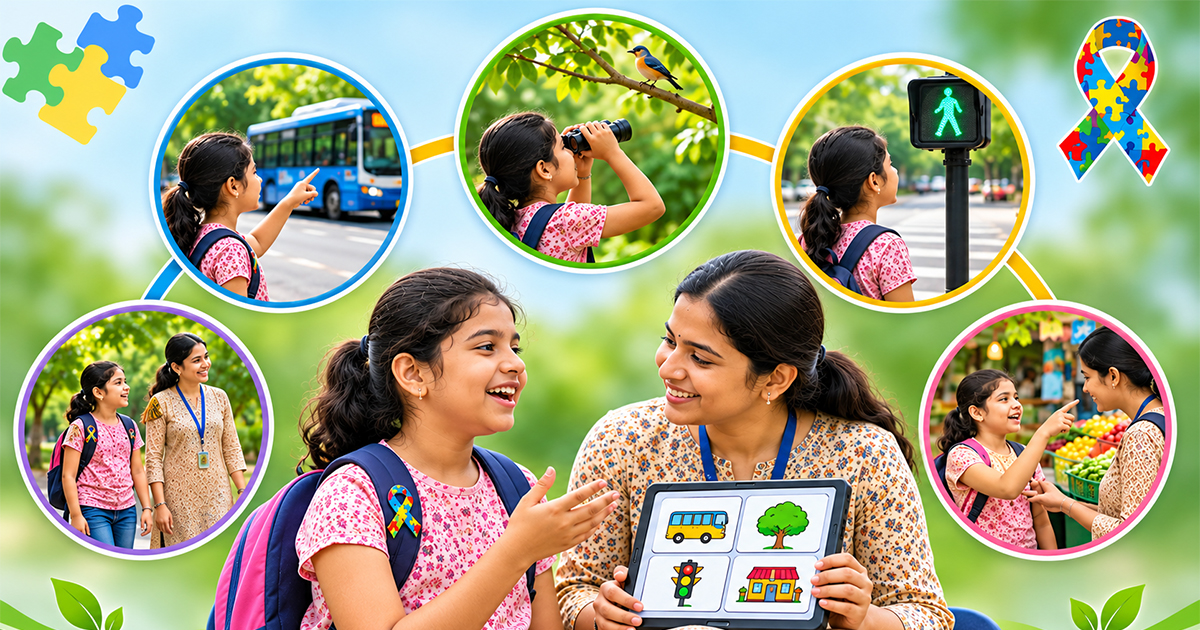
Intervention incorporated natural environment teaching, functional communication training, guided observation tasks, behavioural principles, and community-based skill generalization. Goals included improving eye contact, body language, social communication, landmark recognition, environmental awareness, and narration of daily experiences.
Unique Clinical Approach
Rather than relying solely on structured language exercises, therapy emphasized real-life experiences. Systematic training in observing, identifying, and describing the environmental features encountered during travel and daily routines, thereby helping to link communication with meaningful experiences.
Measurable Outcomes
| Area | Baseline | Post Intervention |
|---|---|---|
| Landmark Identification | Less than 10% landmarks identified on familiar routes | Approximately 50% landmarks identified and described |
| Journey Narration | Typically mentioned only who accompanied her | Provided structured narration including landmarks, events and surroundings |
| Relevant Details During Conversation | 1–2 meaningful details | 6–10 meaningful details |
| Conversational Engagement | 1–2 conversational exchanges | 5–10 conversational exchanges |
| Environmental Awareness | Limited awareness of surroundings | Actively observed and discussed environmental cues |
| Eye Contact | Maintained less than 20% of interaction | Maintained approximately 60–70% of interaction |
| Confidence in Unfamiliar Settings | Low confidence and dependence on others | Improved confidence and participation in new environments |
Family Feedback
Family members reported noticeable improvements in communication, confidence, and environmental awareness. The client became more engaged in conversations and increasingly discussed places she visited and experiences she encountered. The family expressed satisfaction with her growing independence and enhanced participation in everyday situations.
Expert Commentary by Praveena
This case highlights the importance of addressing environmental awareness and contextual communication in individuals with Autism Spectrum Disorder. While many intervention programs focus on vocabulary acquisition and structured language development, meaningful independence requires the ability to observe, interpret, and communicate information from the surrounding environment. By integrating communication goals with real-world experiences, significant improvements were achieved in both functional communication and daily living skills.
Conclusion
Through structured therapeutic support and real-world skill development, the client achieved meaningful improvements in social communication, environmental understanding, confidence, and independence, ultimately enhancing her quality of life and everyday functioning.