
Tympanometry Test
A quick test that checks how well the eardrum and middle ear are functioning and helps identify possible middle ear problems
What is tympanometry Test?
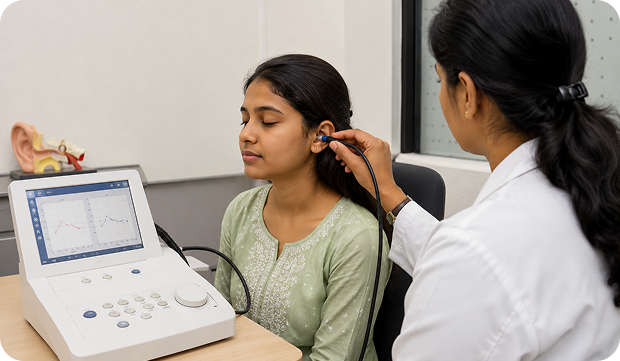
Tympanometry is a diagnostic test that measures how your eardrum moves in response to small changes in air pressure. It does not test how well you hear. Instead, it checks whether your middle ear, the eardrum, the tiny bones behind it, and the eustachian tube are working correctly.
The test takes only a few minutes and involves no needles, no loud sounds, and no discomfort. A soft probe is placed at the opening of the ear canal, and the results are recorded as a graph called a tympanogram. Audiologists use this graph to spot fluid buildup, eardrum stiffness, wax blockages, or pressure problems that a standard hearing test cannot reveal.
Who Needs This Therapy?
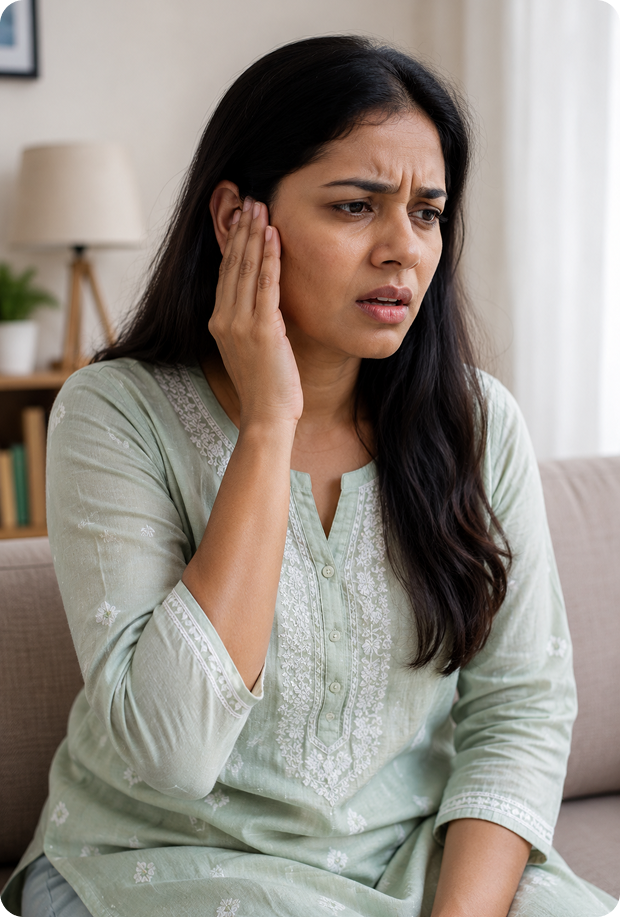
A tympanometry test is often the first step in figuring out why a hearing or ear problem is happening.
Common reasons doctors recommend tympanometry:
Recurring Ear Infections
Frequent infections or ongoing ear pain that keeps coming back
Fluid Behind the Eardrum
A feeling of fullness or muffled hearing that suggests trapped fluid
Sudden or Unclear Hearing Loss
Hearing that has changed and needs a cause, not just a hearing score
Before Hearing Aid Fitting
A baseline check to confirm the middle ear is healthy before fitting
Children With Speech Delays
Middle ear problems are a common, often missed, cause of delayed speech
Ringing or Pressure in the Ear
Tinnitus or a blocked feeling that hasn't gone away on its own
Tympanometry Test in Chennai — RISE
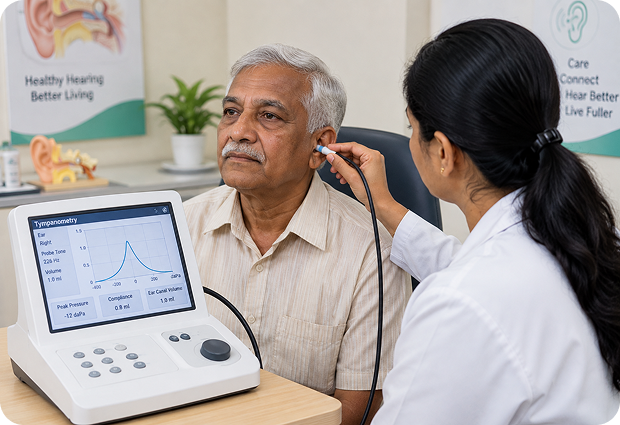
RISE performs tympanometry using calibrated, clinic-grade equipment, with every reading reviewed and interpreted by qualified audiologists rather than left to automated software alone. The test is available for children, adults, and seniors, making it a routine part of ear health checks across all ages, whether you are investigating a child’s speech delay or your own recurring ear discomfort.
Results are explained in person on the same day, so you leave with a clear understanding of your middle ear health and direct answers to your questions. If further testing or treatment is needed, the audiologist will walk you through the next steps before you leave.
How The Tympanometry Is Performed at Rise
Ear Canal Preparation
Before the test begins, the audiologist examines your ear canal using an otoscope to check for visible wax, debris, or irritation. Any buildup that could interfere with the probe seal is cleared first. This step ensures the readings that follow are accurate and not skewed by blockage.
Pressure Variation Testing
A small, soft-tipped probe is placed at the opening of your ear canal to create an airtight seal. The device then varies air pressure in gentle, controlled steps, moving from positive to negative. You may feel mild pressure, similar to a change in altitude, but nothing painful.
Movement Measurement
As pressure changes, the device tracks how much your eardrum flexes and moves in response. This movement, or lack of it, reveals how flexible or stiff the eardrum is. Restricted movement can point to fluid, wax, or structural issues affecting the middle ear.
Tympanogram Generation
The recorded movement readings are automatically plotted onto a graph called a tympanogram. This graph shows eardrum flexibility across the full range of pressure tested. Its shape and peak position are what audiologists rely on to assess middle ear function.
Immediate Analysis
Once the tympanogram is generated, the audiologist reviews it with you right away. They explain what the shape and pattern indicate about your middle ear health, answer any questions, and outline next steps if further testing or treatment is needed.
How To Prepare for Your Tympanometry Test
No special preparation needed
Tympanometry does not require fasting, medication changes, or any advance preparation. A few things help the test go smoothly

Avoid inserting cotton buds or ear drops in the days before your visit unless prescribed.
Mention any recent ear surgery, a perforated eardrum, or an active ear infection before the test starts.
For children, a calm, cooperative state helps the probe stay in place for the few seconds needed.
What To Expect After Your Tympanometry Test

Your Results
You receive a tympanogram printout the same day, along with a plain-language explanation of what it shows.

Understanding Your Hearing
If tympanometry points to a middle ear issue, the audiologist may recommend a pure tone audiometry test or speech audiometry test to check hearing thresholds directly.

What Next
Based on the findings, you may be referred for medical treatment, wax removal, further audiological testing, or simply told the middle ear is functioning normally.
What Type of Results Will I Get From A Tympanometry Test?
Tympanometry results fall into a few broad patterns, each shown as a different tympanogram shape.
Type A — Normal
The eardrum moves freely, indicating the middle ear is functioning well.
Type B — Flat or Reduced
Can point to fluid behind the eardrum, a perforation, or a blocked ear canal.
Type C — Shifted Peak
Usually suggests negative pressure in the middle ear, often linked to eustachian tube problems.
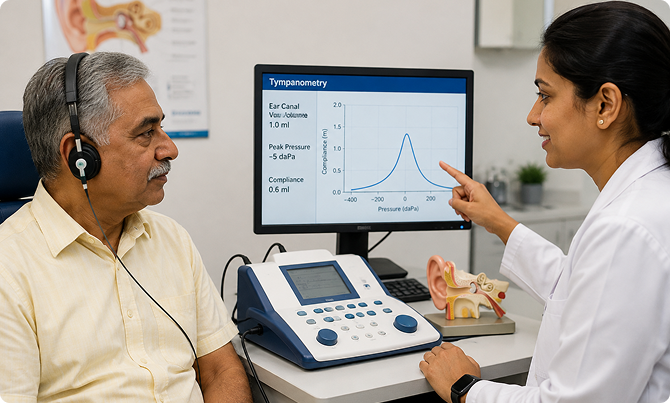
These categories give the audiologist a starting point. Results are always read alongside your symptoms and history, not in isolation.
Frequently Asked Questions (FAQs)
What does a tympanometry test show?
It shows how well your eardrum moves and how the middle ear is functioning. It does not measure hearing sensitivity directly.
What is the difference between tympanometry and a pure tone audiometry test?
Tympanometry checks middle ear function using air pressure. A pure tone audiometry test measures how softly you can hear different sounds and pitches.
Will my ears hurt during a tympanometry test?
No. You may feel brief pressure or a slight popping sensation, but the test is not painful.
How much time does a tympanometry test take?
The test itself takes only a few minutes per ear, though your full appointment may run longer with consultation.
What do unusual tympanometry test results mean?
An unusual result can point to fluid, wax blockage, a perforated eardrum, or pressure imbalance. It does not confirm a diagnosis on its own and is reviewed alongside other findings.
Does a tympanometry test check for hearing loss?
Not directly. It checks middle ear function, which can contribute to hearing loss, but a separate hearing test is needed to measure hearing thresholds.
Is a tympanometry test safe for toddlers and children?
Yes. It is non-invasive and commonly used with young children, including as part of speech and developmental evaluations.
Can wax inside my ear change the test results?
Yes. Excess wax can block the probe seal and affect readings, which is why the audiologist checks the ear canal first.
What happens after my tympanometry test is done?
You get your results the same day, and the audiologist explains next steps, whether that is further testing, treatment, or a normal result.
Where can I find the most accurate tympanometry test in Chennai?
RISE offers tympanometry testing with calibrated equipment and audiologist-reviewed results for children and adults.


Take the First Step — Book Your Consultation
Book an assessment with RISE certified specialists and get a clear, personalised plan for your or your child’s hearing, communication, or developmental needs.