Speech & Language Assessment
Assessing speech, language, fluency, voice, and communication skills to identify difficulties and guide personalised support.
What is a Speech and Language Assessment?
A Speech & Language Assessment is a structured evaluation of how a person produces speech, understands language, expresses ideas, and communicates with others. Depending on age and individual concerns, it may assess vocabulary, sentence formation, comprehension, articulation, fluency, voice, oral motor skills, and social communication.
For children, assessment can identify communication difficulties that may affect learning, classroom participation, and interaction with peers. For adults, it can help identify changes following a stroke, injury, or other condition. The assessment also establishes a baseline to guide personalised therapy and monitor progress over time.
At RISE, our Speech & Language Assessment services are designed to understand an individual’s communication abilities, identify areas of difficulty, and provide a clear direction for further therapy or support.
Who Needs a Speech and Language Assessment?
A Speech & Language Assessment can benefit anyone with concerns about how they understand, produce, or use language to communicate, regardless of age.

Children
Delays in talking, difficulty being understood, trouble following instructions, or challenges interacting with peers are common reasons for assessment. Early evaluation during the preschool and school years helps support learning and social development.
Adults
Speech, language, or memory changes following a stroke, traumatic brain injury, or other neurological event may call for assessment. Ongoing voice changes, stuttering, or difficulty communicating in professional or social settings are also common reasons adults seek evaluation.
Hearing Device Users
Since speech and language development is closely connected to hearing ability, individuals using hearing devices can benefit from assessment too. A combined audiological and speech-language evaluation offers a fuller picture of communication needs.
If communication difficulties are affecting daily interactions, learning, work, or confidence, a Speech & Language Assessment is a practical first step toward understanding the cause and identifying the right support.
How is a Child's and Adult's Speech Assessed?
The assessment process is adapted to the person’s age, communication needs, and reason for referral.
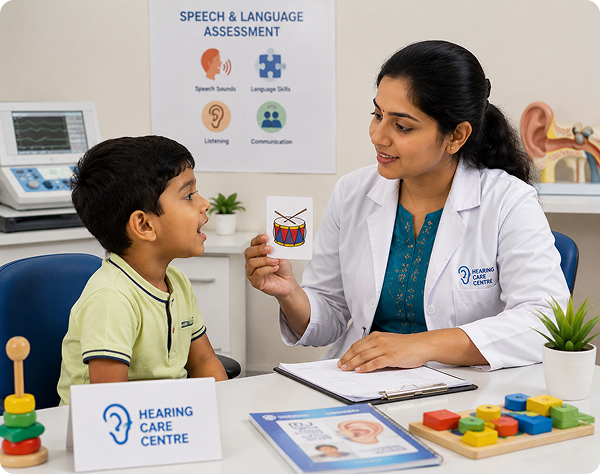
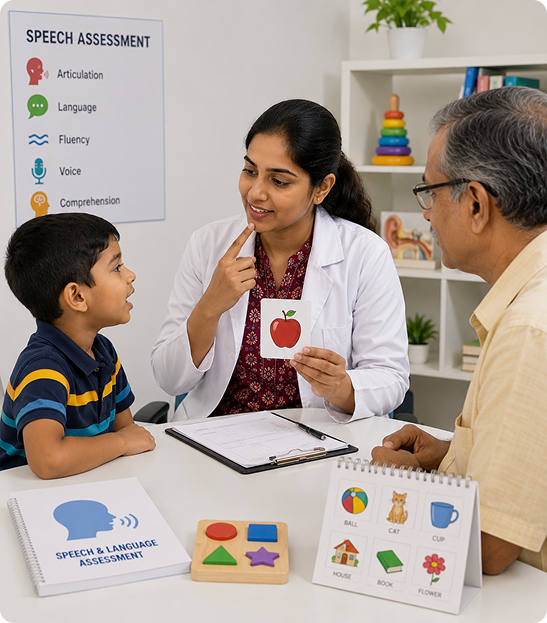
For children, the speech-language professional may begin by discussing developmental history, communication concerns, and situations in which the difficulty is most noticeable. The child may then be observed during conversation, play, picture-based activities, or structured tasks. Their ability to understand and use language, produce speech sounds, and communicate appropriately is assessed.
For adults, the assessment may include conversation, reading, naming, comprehension, repetition, and other structured communication tasks. Where relevant, the assessment may consider changes that occurred after a stroke, injury, or other medical event.
The findings help identify communication strengths and difficulties, determine areas requiring support, and guide personalised therapy.
Signs That Speech or Language Therapy May Be Needed for Children
Late Talking or Limited Vocabulary
Difficulty Forming Sentences
Mispronouncing Sounds
Stammering or Hesitations
Difficulty Understanding Instructions
Signs That Speech or Language Therapy May Be Needed for Adults
Speech Clarity Issues After Stroke or Injury

Voice Disorders

Communication Difficulties

Stuttering or Fluency Challenges

What's Included in the Assessments?
The exact assessment components depend on the individual’s concerns and age. A comprehensive evaluation may include:

Voice Disorders
Language Comprehension and Expression Testing
Oral Motor Examination
Where appropriate, the movement and coordination of the structures involved in speech, such as the lips, tongue, and jaw, may be assessed.
Voice and Fluency Assessment
Our Speech & Language Assessment Therapy Focus
Following assessment, therapy recommendations are based on the individual’s specific communication needs. Areas of focus may include:
Articulation Improvement
Language Development
Fluency Enhancement
Voice Therapy
Social Communication Skills
Developing conversational skills, turn-taking, understanding social cues, and appropriate communication in different settings.

Benefits of Speech & Language Assessment and Therapy
A timely assessment helps identify communication difficulties and provides a clear direction for appropriate support and therapy.
Improved Communication
Greater Confidence
Better Academic Participation
Stronger Workplace Communication
Enhanced Social Interaction
Personalised Support
Assessment findings help guide targeted therapy and ensure intervention focuses on the individual’s specific communication needs and goals.
Why Choose RISE Centre for Speech & Language Assessment?
At RISE, we take an individualised approach to understanding speech and language needs, with assessments designed around each person’s age, abilities, and concerns.
Accurate Assessment
Structured evaluation helps identify specific speech, language, voice, fluency, and communication difficulties.
Early Intervention
Identifying communication concerns early can support timely intervention and reduce their impact on learning and everyday interactions.
Customised Therapy Plans
Therapy recommendations are tailored to individual communication needs, abilities, and everyday goals.
Progress Tracking
Regular monitoring helps measure improvement, review therapy goals, and adjust intervention as communication skills develop.
Frequently Asked Questions
When should a child have a speech and language assessment?
Is a speech and language assessment only for children?
How long does a speech and language assessment take?
Does every speech difficulty require therapy?
Not necessarily. An assessment is used to understand the nature and extent of the difficulty. Based on the findings, the professional may recommend therapy, monitoring, further evaluation, or other appropriate support.
Can speech and language difficulties be related to hearing problems?
Can adults improve speech after a stroke or injury?
What happens after the assessment?
The findings are discussed with the individual or family, along with recommendations for the next step. Where appropriate, a customised speech and language therapy plan may be suggested, with progress reviewed over time.


Take the First Step — Book Your Consultation
Book an assessment with RISE certified specialists and get a clear, personalised plan for your or your child’s hearing, communication, or developmental needs.