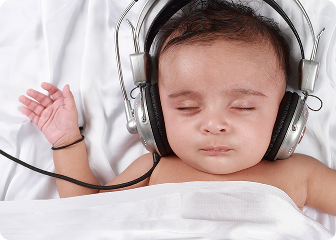
Newborn Hearing Screening Test in Chennai
Safe| Painless| Results on the spot
The first step in protecting your baby's hearing
Introduction
Your newborn cannot tell you what they hear. Or what they don’t.
Hearing loss in newborns leaves no visible signs. A baby with reduced hearing will still startle at loud sounds, still respond when you speak close by, and still appear completely healthy in every routine check. Without a dedicated screening, a hearing concern can go undetected for months, quietly affecting the very development that happens fastest in the first year of life.
A newborn hearing screening test is the only reliable way to know. At RISE Hearing Aid Centre in Chennai, we offer this screening using clinical-grade OAE and AABR equipment. It is safe, painless, and complete in minutes, with results explained by our audiologist before you leave.
Hearing Loss Possibilities in Babies
Congenital hearing loss is more common than most parents expect. Approximately 2 to 3 in every 1,000 babies are born with hearing loss in one or both ears. This number rises significantly for babies who spent time in the NICU or were born prematurely.
Congenital hearing loss can arise from several causes:
Genetic factors, no prior family history needed
Premature birth or low birth weight
Infections during pregnancy
Severe jaundice at birth requiring medical intervention
Certain medications taken during pregnancy
Complications involving oxygen deprivation during delivery
Most babies born with hearing loss have no family history of the condition at all. This is why the newborn hearing screening test is recommended for every baby, not just those considered high-risk. You cannot predict it. But you can detect it early.
Importance of Newborn Hearing Screening

Catches Hidden Hearing Issues Early
Standard newborn check-ups do not test hearing clinically. Babies with reduced hearing still react to vibrations and nearby voices, giving parents false reassurance. Only a dedicated screening with calibrated equipment delivers a reliable result. Identifying a concern in the first weeks puts families in the strongest position to act.
Protects Your Baby's Speech and Language Growth
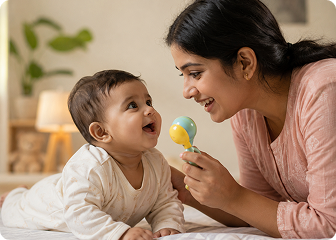
Children begin learning speech and language in the first six months, long before they say a single word. The brain is actively building the foundations of communication. A baby who cannot hear during this period misses input that cannot be recreated later. Early identification gives the auditory brain what it needs, when it needs it.
Stops Your Baby from Falling Behind in School and Learning
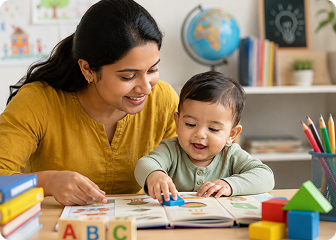
Undetected hearing loss has a long reach. Children who miss early language development arrive at school with vocabulary gaps, reading difficulties, and challenges following instruction. Left unaddressed, these gaps widen with every passing year. Identifying and addressing hearing loss in infancy gives children a fair start long before they enter a classroom.
To Secure the Critical 6-Month Brain Development Window
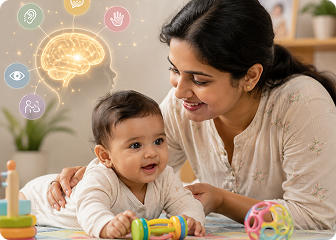
The first six months are the most neurologically active period of a child's life. The brain is building its auditory pathways in real time, and what forms during this window is foundational. Children with hearing loss who receive support within these months develop language abilities significantly closer to their hearing peers. The screening takes minutes. The benefit lasts a lifetime.
To Start Treatment Quickly Before Any Delays Happen
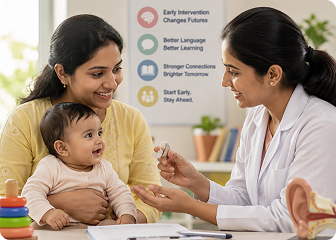
Early intervention is the most powerful tool available for children with hearing loss. Hearing devices, auditory therapy, and communication support all work best while the brain is in its most responsive phase. Every week of early support matters. Waiting closes options that are difficult to reopen.
When Is the Newborn Hearing Screening Test Performed?
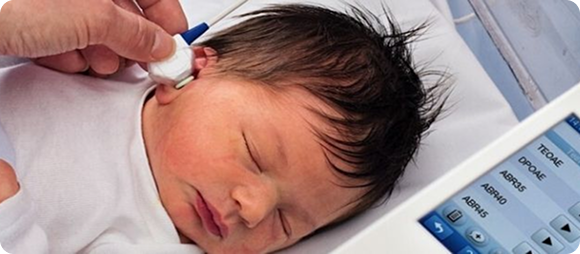
The ideal time for a newborn hearing screening is within the first month of life, before leaving the hospital if possible. At RISE Hearing Aid Centre, we schedule screenings from Day 2 through to Week 4. The test is conducted while your baby is calm, resting, or naturally asleep. No preparation is needed from you or your baby. The process is entirely non-invasive and causes no discomfort.
Two methods are used at RISE Hearing Aid Centre
OAE (Otoacoustic Emissions)
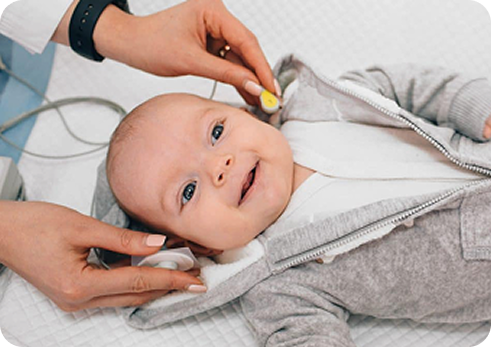
A small, soft probe is placed gently at the entrance of the ear canal. The equipment plays quiet sounds and measures the natural echo produced by a healthy cochlea. If no echo is recorded, it indicates that closer evaluation may be needed. The test takes one to two minutes per ear.
AABR (Automated Auditory Brainstem Response)
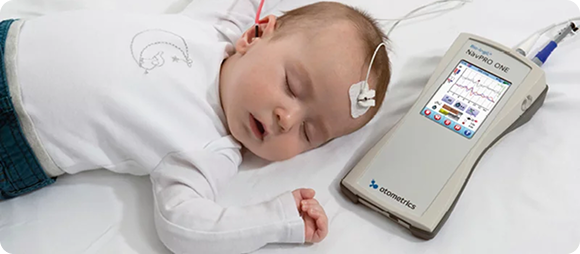
Small sticker-like sensors are placed on your baby’s head. Soft clicking sounds are played through miniature earphones while the sensors record how the auditory nerve and brainstem respond. Unlike OAE, AABR traces the full hearing pathway from ear to brain, making it effective for detecting neural hearing loss as well. This test takes 5 to 15 minutes.
Both tests are safe, painless, and require no response from your baby. Many babies sleep through them entirely.
When Will You Get the Results?
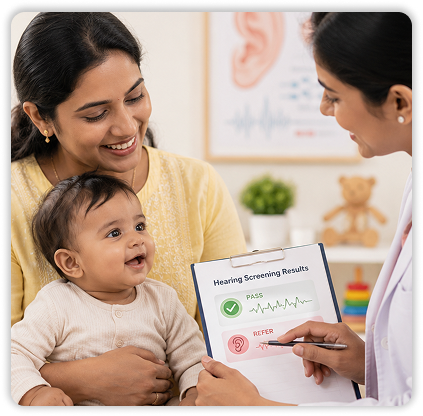
Results are available immediately after the screening is complete. Our audiologist will walk you through the findings in plain language before you leave the clinic.
There are two possible outcomes
Refer: One or both ears produced a result that warrants a closer look. A refer result does not confirm hearing loss. It means a more detailed diagnostic evaluation is the right next step. Refer results can occur for a range of reasons including fluid in the ear canal or an unsettled baby during testing.
What Should You Do If the Baby's Hearing Screening Reveals Potential Hearing Loss?
A refer result is not a diagnosis. It is a direction. At RISE Hearing Aid Centre, the pathway forward is clear and we walk every family through it step by step.
Schedule an In-Depth Diagnostic Hearing Evaluation
The follow-up evaluation should be completed as soon as possible, ideally before your baby is 3 months old. At RISE Hearing Aid Centre, this is a comprehensive paediatric hearing assessment that determines whether hearing loss is present, which ears are affected, the type, and the degree across frequencies. Conducted entirely in-house by our specialist audiologist, it forms the foundation for every decision that follows.
Explore Hearing Aid Devices
If hearing loss is confirmed, appropriate devices can be fitted from as early as one month of age. Paediatric hearing aids are purpose-built for infants, programmed precisely to each child's individual hearing profile. At RISE Hearing Aid Centre, our audiologist guides families through device options based on diagnostic findings, with fitting, calibration, and ongoing follow-up built into the process.
Enroll in Pediatric Communication and Auditory Programs
Devices open access to sound. Structured programmes teach the brain to use it. Early enrolment in paediatric communication and auditory support gives your child the consistent, targeted input needed to build speech and language from the ground up. At RISE Hearing Aid Centre, our team coordinates with allied professionals to connect your family with the right support at every stage.
Schedule Your Baby's Hearing Screening in Chennai Today
The screening takes minutes. What you learn from it shapes everything that follows.
At RISE Hearing Aid Centre in Chennai, every newborn hearing screening is conducted by a qualified audiologist using clinical-grade equipment, with results explained clearly on the spot and next steps mapped out before you leave.
Your baby’s hearing health starts here.